





Cognitive Performance
Best Nootropic Stack 2026: A Complete Evidence-Based Guide
In This Article
Search "nootropic stack" and you'll find dozens of templated lists recommending the same five compounds. Most of those lists are written by affiliates. This guide is different — it covers what compounds have actual human research, how they fit together, and what doesn't belong on the list.
What Is a Nootropic Stack?
A nootropic stack is a combination of cognitive-support compounds taken together to address different cognitive pathways. A well-designed stack does three things: (1) provides a daily foundation, (2) supports acute performance demands, and (3) prioritizes recovery — because no nootropic substitutes for sleep.
The Foundational Layer: Daily Mushroom Complex
The base of any serious cognitive stack is a multi-species mushroom complex taken daily. Lion's Mane (PMID: 31413233), Cordyceps (PMID: 33233059), and Reishi (PMID: 31777019) have research supporting cognitive function, cellular energy, and stress adaptation respectively. The mechanism is nutritional and adaptogenic — effects build over weeks of consistent use, not in a single dose.
The Performance Layer: Acute Cognitive Enhancers
For deep work, the most-researched compounds are: Alpha-GPC (acetylcholine precursor, see De Jesus Moreno 2003), Bacopa monnieri (memory consolidation, PMID: 31622587), Phosphatidylserine (neuronal membrane integrity), and the L-Theanine + Caffeine combination (multiple replicated studies — Haskell 2008, Kelly 2008). These are taken situationally, 30 minutes before demanding work.
The Recovery Layer: Sleep Optimization
Sleep is the most important cognitive enhancer. Research-supported sleep compounds: low-dose melatonin (2mg, not 10mg — PMID: 33417003), valerian root (Bent 2006 meta-analysis), GABA, and L-Tryptophan. Without sleep, no other stack component works.
What Doesn't Belong in Your Stack
Racetams have weak human evidence outside specific clinical populations. "Mushroom blends" with no disclosed dosing are often pixie-dust products. Anything claiming "instant cognitive enhancement" is marketing.
How to Build Your Stack: The MYKO System
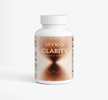
MYKO Clarity is the daily foundation. MYKO Drive is the situational performance layer (with Alpha-GPC, Bacopa, Phosphatidylserine, L-Theanine + Caffeine, Huperzine A). MYKO Rest is the recovery layer with 2mg melatonin. MYKO Brew is the optional ritual upgrade.
Common Mistakes When Building a Nootropic Stack
Stacking too many compounds at once. Expecting acute effects from adaptogens. Underdosing key ingredients (proprietary blend math). Skipping recovery. Adding new compounds before establishing a daily baseline.
MYKO Clarity + MYKO Drive together form the foundation + performance layers of an evidence-based stack.
Frequently Asked Questions
How many compounds should be in a nootropic stack?
Quality > quantity. A well-designed stack has 4–10 evidence-supported compounds at research-relevant doses. More compounds doesn't mean better — it often means proprietary blends and pixie-dust dosing.
Can I stack different brands together?
Yes, but watch for ingredient overlap and total dose. If two products both contain L-theanine + caffeine, you may exceed comfort. Read labels carefully.
How long until I notice stack effects?
Acute compounds (L-theanine + caffeine, Alpha-GPC): 30–60 minutes. Adaptogens (Lion's Mane, Bacopa): 2–6 weeks of daily use. The full protocol compounds over 8–12 weeks.
Is daily use safe long-term?
For evidence-based compounds at studied doses (MYKO formulas), yes. Avoid stimulant-heavy stacks daily — caffeine tolerance builds and crashes worsen. Use acute stacks situationally.
The Practical Protocol
- Daily foundation: MYKO Clarity (mushroom complex)
- Acute performance: MYKO Drive 30 min before deep work — 3–4×/week
- Recovery: MYKO Rest every night
- Ritual: MYKO Brew morning replacement
- Avoid: Stacking acute caffeine products together
References:
Mori K, et al. (2009). PMID: 18844328 — Lion's Mane cognitive support
Stough C, et al. (2001). The chronic effects of an extract of Bacopa monnieri (Brahmi) on cognitive function. Psychopharmacology. PMID: 11498727
Haskell CF, et al. (2008). The effects of L-theanine, caffeine and their combination on cognition. Nutritional Neuroscience. PMID: 18681988
De Jesus Moreno M (2003). Alpha-GPC in the treatment of cognitive impairment. Clinical Therapeutics. PMID: 12637119
*These statements have not been evaluated by the Food and Drug Administration. This product is not intended to diagnose, treat, cure, or prevent any disease.
The MYKO Protocol
MYKO Drive · DR-01™
10 nootropics. For the days that demand the most. Research-backed doses. Third-party tested. 30-day money-back guarantee.
Shop MYKO Drive →