
Coffee
Best Mushroom Coffee Brands Compared (2026): What's Actually in Your Cup
In This Article
Mushroom coffee went from niche to a $500M+ category in five years. Most of the products in that category share two problems: cheap commodity coffee and undisclosed mushroom ratios. Here's how to evaluate what you're actually getting.
What Is Mushroom Coffee?
Mushroom coffee blends ground coffee with functional mushroom powder or extract. The original idea was that the L-theanine-like calm of certain mushrooms could smooth out caffeine's jitter while adding cognitive-supportive compounds to your morning ritual.
The Problem with Most Mushroom Coffee Products
Two issues dominate: (1) Coffee quality. Most mushroom coffees use commodity Robusta or low-grade Arabica — beans whose flavor profile is masked by additives. (2) Undisclosed ratios. Many products list "mushroom extract" without specifying the percentage of mushroom relative to coffee. A product with 0.5% mushroom is fundamentally different from one with 5%.
What to Look for: A Buyer's Checklist
- Disclosed bean varietal and origin
- Roast level specified
- Mushroom species named (not "mushroom blend")
- Ratio of mushroom to coffee disclosed
- Organic certification for mushroom inputs
The Coffee Matters Too: Arabica vs Robusta
Arabica beans have lower caffeine but more complex flavor compounds and lower acidity. Robusta has 2x the caffeine but a bitter, harsher profile. Premium Arabica varietals (Bourbon, Typica, Catuaí, Catucaí, Mundo Novo) are typically grown at higher altitudes with more careful processing — the flavor difference is significant.
Lion's Mane vs Chaga: Which Mushroom Belongs in Coffee?
Both work in coffee for different reasons. Lion's Mane contributes water-soluble compounds (hericenones) that survive brewing. Chaga is rich in antioxidant polyphenols and beta-glucans. A balanced ratio — like 5% Lion's Mane + 5% Chaga — provides both neural-support compounds and antioxidant load without overwhelming the coffee flavor.
MYKO Brew: Sourcing and Ratio Transparency
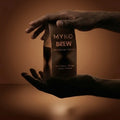
90% premium Arabica from Brazil and Mexico (Bourbon, Typica, Catuaí, Catucaí, Mundo Novo varietals), medium roast, low acidity. 5% organic Lion's Mane, 5% organic Chaga. The ratio is disclosed because we want you to know exactly what you're drinking.
MYKO Brew: 90% premium Arabica (Brazil + Mexico varietals) · 5% organic Lion's Mane · 5% organic Chaga. Disclosed ratio.
Frequently Asked Questions
Does mushroom coffee taste like coffee?
If made with quality beans, yes. The 5% Lion's Mane + 5% Chaga ratio (MYKO Brew) doesn't alter coffee flavor significantly. Cheaper brands with higher mushroom percentages can taste earthy.
Does it have less caffeine?
MYKO Brew has standard Arabica caffeine (~95mg per 8oz cup). The mushroom content doesn't reduce caffeine — it complements it.
Can I brew it like regular coffee?
Yes. Drip, pour-over, French press, espresso — all standard methods work. Medium roast performs best in pour-over and drip.
Is mushroom coffee safe daily?
Yes for healthy adults. Functional mushroom doses at 5% each in MYKO Brew are well within safe daily limits.
The Practical Protocol
- Method: Standard coffee brewing — drip or pour-over
- Daily dose: 1–2 cups
- Timing: Morning to early afternoon (caffeine half-life)
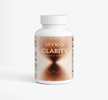
- Stack with: MYKO Clarity for full mushroom complex support
References:
Erdoğan A, et al. (2018). Bioactive compounds and health effects of Hericium erinaceus. Journal of Functional Foods.
Glamočlija J, et al. (2015). Chemical characterization and biological activity of Chaga (Inonotus obliquus). Journal of Ethnopharmacology. PMID: 25861948
Specialty Coffee Association of America (SCAA) Arabica Cupping Protocol. (2017).
*These statements have not been evaluated by the Food and Drug Administration. This product is not intended to diagnose, treat, cure, or prevent any disease.
The MYKO Protocol
MYKO Brew · BW-01™
Premium Arabica + Lion's Mane + Chaga. Same ritual, better output. Research-backed doses. Third-party tested. 30-day money-back guarantee.
Shop MYKO Brew →