





Cognitive Performance
Lion's Mane Benefits: What the Research Actually Says
In This Article
Lion's Mane (Hericium erinaceus) has become one of the most discussed mushrooms in the cognitive performance space. But much of what's said about it online mixes real research with marketing claims. This article covers what the published science actually supports — and what it doesn't.
What Is Lion's Mane?
Lion's Mane is a white, globe-shaped fungus with long, flowing spines that resemble a lion's mane. It has been used in traditional East Asian medicine for centuries, primarily for digestive and neurological support. Today, it's studied primarily for its effect on the nervous system.
The NGF Connection: Why Researchers Are Interested
The most studied mechanism of Lion's Mane is its effect on Nerve Growth Factor (NGF) — a protein that supports the growth, maintenance, and survival of neurons, particularly in the hippocampus, the brain region most associated with memory and learning.
Two key bioactive compounds in Lion's Mane — hericenones (found in the fruiting body) and erinacines (found in the mycelium) — have been shown in laboratory and animal studies to stimulate NGF synthesis.
A 2009 study published in Phytotherapy Research (Mori et al., PMID: 18844328) found that 3g/day of Lion's Mane for 16 weeks significantly improved scores on cognitive function scales in adults with mild cognitive impairment versus placebo. Scores declined again 4 weeks after discontinuation. A 2019 study (PMID: 31413233) in the Journal of Neurochemistry identified specific compounds that promote neurite outgrowth — with implications for neuroplasticity.
What the Research Supports
- Improved performance on cognitive function tests in adults with mild cognitive impairment
- Reduced symptoms of anxiety and depression (Nagano et al., 2010, PMID: 20834180)
- Stimulation of NGF synthesis in cell cultures and animal models
- Promotion of myelin repair in peripheral nerve injury models
What the Research Does Not Support (Yet)
Direct NGF stimulation in living human brain tissue has not been measured (only inferred from biomarkers and cognitive tests). Long-term effects beyond 16 weeks have not been studied in rigorous human trials. Optimal dosing has not been established by meta-analysis. This doesn't mean the mechanism doesn't work — it means the research is ongoing.
Dose: What's Been Used in Studies
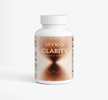
Published human studies have primarily used doses of 500mg–3,000mg of dried fruiting body powder per day. MYKO Clarity contains 266mg of Lion's Mane (Fruit) per serving — positioned within the studied range as part of a multi-species complex.
How Long Does It Take to Work?
Mori et al. (2009) showed significant cognitive improvements at 16 weeks. Most customers report subtle cognitive shifts in weeks 2–4, with cleaner effects establishing by month 2–3 of daily use. Lion's Mane is not a stimulant — it doesn't work in 20 minutes.
The Bottom Line
Lion's Mane has more rigorous research behind it than most cognitive supplements. The NGF pathway is mechanistically plausible, the human trials are positive (if limited in size and duration), and the safety profile is excellent. If you're looking for a daily supplement to support long-term cognitive health, Lion's Mane belongs in the conversation.
MYKO Clarity contains Lion's Mane (Fruit, 266mg) as part of a 10-species, 1,330mg full-spectrum complex.
Frequently Asked Questions
Can I take Lion's Mane every day?
Yes. Lion's Mane is safe for daily use based on available research. Mori et al. (2009) used daily supplementation for 16 weeks with no reported adverse effects. Current evidence supports Lion's Mane as a daily cognitive supplement, not a cycled or occasional one — consistent use is what allows NGF-related mechanisms to develop over time.
Does Lion's Mane need to be taken with food?
Food is not strictly required but may improve absorption of fat-soluble compounds. Taking it with your first meal — as part of a consistent morning routine — is the most practical approach and improves compliance. Daily consistency matters more than exact timing relative to food.
Can I stack Lion's Mane with caffeine or other nootropics?
Yes. Lion's Mane and caffeine don't interact negatively. MYKO Brew provides both in one product — Lion's Mane + Chaga in premium Arabica. Many customers use MYKO Clarity daily and MYKO Drive (with L-Theanine + Caffeine) situationally.
Is fruiting body or mycelium better?
Mori et al. (2009) used fruiting body powder for cognitive function. Mycelium contains erinacines and other bioactive compounds absent in fruiting body alone. MYKO Clarity uses Lion's Mane fruiting body — as labeled.
The Practical Protocol
- Dose: 266mg daily (as part of MYKO Clarity's 1,330mg complex)
- Timing: With first meal — morning preferred
- Duration: 8–12 weeks minimum before evaluating results
- Stack: Pairs with MYKO Drive for acute performance sessions
- Expectation: Subtle cognitive improvements building over weeks — not immediate
References:
Mori K, et al. (2009). Improving effects of the mushroom Yamabushitake on mild cognitive impairment. Phytotherapy Research. PMID: 18844328
Nagano M, et al. (2010). Reduction of depression and anxiety by 4 weeks Hericium erinaceus intake. Biomedical Research. PMID: 20834180
Martínez-Mármol R, et al. (2019). Hericerin derivatives activate a pan-neurotrophic pathway in hippocampal neurons. Journal of Neurochemistry. PMID: 31413233
*These statements have not been evaluated by the Food and Drug Administration. This product is not intended to diagnose, treat, cure, or prevent any disease.
The MYKO Protocol
MYKO Clarity · CL-01™
10 mushroom species. Daily cognitive foundation. Research-backed doses. Third-party tested. 30-day money-back guarantee.
Shop MYKO Clarity →